
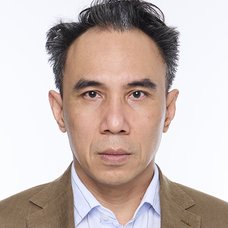
Pranoto Iskandar
A primary trajectory of my speculative scholarship is the advancement of comparative legal theory rooted in vernacular parochialism, challenging universalizing paradigms by examining how legal concepts acquire meaning from within distinct local social imaginaries rather than through their presumed conformity to Western theoretical originals. Working at the intersection of comparative constitutional theory, legal pluralism, and postcolonial thought, my study foregrounds the agency of recipient societies in reshaping imported legal and political vocabularies. Indonesia functions as a crucial analytical foil in this endeavor. In my most recent exploratory works, I expound indigenous sensibilities, folk traditions, linguistic translations, and regional institutional realities as generative sources of constitutional meaning rather than merely contextual variations of supposedly universal concepts.
At the center of this project lies an effort to develop what may be described as a vernacular constitutional and legal theory. Instead of asking whether non-Western constitutional orders faithfully reproduce established constitutional models, my interpretive efforts interrogate how constitutional and legal concepts are transformed, reconstructed, and vernacularized as they travel across cultural and linguistic boundaries. Key disciplinary concepts such as constitutional law, constitutionalism, and the general theory of the state are thus examined not as fixed analytical categories but as historically contingent vocabularies whose meanings emerge through encounters with local traditions, inherited forms of knowledge, and alternative normative horizons. My hope is that this will shift scholarly attention from institutional comparison to conceptual translation, revealing constitutional thought as a dynamic process of meaning-making rather than a static body of universally applicable doctrines.
Moreover, my study suggests that the persistent plurality of social imaginaries does far more than sustain internal legal diversity. My most recent work, for instance, exposes how international law and comparative legal scholarship have been unjustifiably narrowed by their reliance on a limited set of Western major legal traditions as implicit universal baselines. By marginalizing vernacular legal orders and overlooking the conceptual innovations generated within non-Western intellectual traditions, the contemporary international legal architecture arbitrarily constrains its own normative reach and weakens its claim to global legitimacy. Against this tendency, I intend to advance a reconstructionist project that seeks not merely to critique Eurocentric assumptions but to recover and theorize alternative constitutional vocabularies from within local traditions themselves. In doing so, I aim to reimagine comparative legal theory as an interpretive enterprise dedicated to uncovering the lived meanings of legal concepts across diverse constitutional worlds and to expanding the universe of ideas available to global legal thought.
Personal profile
I study law from the conviction that it is fundamentally a humanistic enterprise, one that cannot be fully understood through the tidy abstractions of formal logic alone. Law emerges instead from the psychological dispositions, cultural sensibilities, social imaginaries, and lived experiences of the polities that sustain it. This insight has been reinforced by my work and academic engagements across diverse legal cultures, where I have intimate knowledge concerning how legal concepts are transplanted, resisted, translated, and reimagined in different jurisdictions. These experiences have convinced me that the globalization of legal terminology does not necessarily produce convergence in legal meaning. Rather, identical legal vocabularies often conceal profoundly different understandings of authority, justice, and constitutional order. My teaching and scholarship therefore encourage close attention to the social worlds through which legal ideas acquire meaning and practical significance.
The evolution of my intellectual trajectory reflects a gradual shift from evaluating local legal doctrines through external liberal benchmarks to uncovering the internal normative coherence of vernacular legal traditions. Whereas my earlier work often approached concepts such as Pancasila through the language of political and economic instrumentalism, democratic deficit, or constitutional pathology, my more recent scholarship seeks to understand these traditions on their own terms as distinct post-liberal legal worldviews. Through studies of hukum tata negara as a vernacular constitutional order and negara kesatuan as a folk conception of the state, I explore how local social imaginaries, traditional metaphysics, and inherited cultural sensibilities generate autonomous legal forms that cannot be adequately captured by universalist metrics. This commitment to conceptual translation and vernacular understanding informs both his research and pedagogy, fostering a comparative approach that treats legal diversity not as a deviation from an assumed norm but as an indispensable source of theoretical insight into the nature of law itself.
Metrics
All time
PlumX
Affiliation
Academic Qualifications
- PhD, McGill University01/09/2019 – 25/06/2025Project: Pancasila Nation: Indonesia’s Folk ConstitutionalismAward date: 25/06/2025
- Master, Cornell University01/09/2017 – 25/05/2018Award date: 25/05/2018
Internal Positions
- 01/09/2026 – Ongoing
External Positions
- Research Fellow, Centre for Human Rights and Legal Pluralism McGill University Faculty of Law08/09/2025 – Ongoing
- Adjunct Lecturer, Tarumanagara University08/09/2025 – Ongoing
- Founding Director, The Institute for Migrant Rights16/08/2007 – Ongoing
Teaching
My approach to teaching is deeply shaped by my conviction that law is fundamentally a humanistic enterprise. Over the years, studying, teaching, and engaging with scholars and legal traditions across different jurisdictions and polities has reinforced my belief that legal concepts never travel unchanged. The same constitutional vocabulary can carry very different meanings depending on the historical experiences, cultural sensibilities, political conditions, and moral imaginaries of the communities that use it. For this reason, I approach legal education not as the transmission of settled doctrines, but as a process of critical inquiry into how legal ideas are translated, adapted, contested, and reconstructed in particular social contexts. In the classroom, I rely on comparative case studies, concept-centered seminars, close readings of constitutional texts, and guided discussions that encourage students to question inherited assumptions, examine the politics of legal language, and explore how constitutional concepts acquire meaning through lived experience rather than abstract universal principles.
My goal is to bring formal legal doctrine into direct conversation with the complex realities from which it derives its (emotional or subjective) significance. Through problem-based learning, contextual case analyses, reflective writing exercises, and discussions centered on contemporary legal controversies, I encourage students to investigate how legal rules and principles operate in practice and how different societies construct their own constitutional and legal vocabularies. Rather than treating local legal traditions as imperfect translations of universal models, I invite students to examine how legal concepts are vernacularized through particular historical experiences, cultural sensibilities, and social imaginaries, generating distinct understandings of law, authority, and justice.